Chiang Rai- Tustin, CA
A few weeks ago, I had the pleasure of visiting Chiang Rai, a Michelin-rated Thai spot near Old Town Tustin, with a friend who spent most of her summer exploring Thailand. The stories of her travels and the history of Thailand, accompanied by the tremendous flavors of the food, inspired me to do some research of my own and share it with you all!
The Restaraunt
The restaurant itself is a colorful display of Thai culture, with red, pink, and yellow paper lanterns greeting you as you enter, and upside-down rainbow umbrellas painting the ceiling. The food at Chiang Rai is widely commended (Michelin 2022, 2023, & 2024), but I would strongly argue that the aesthetics deserve far more attention than they get in their online reviews. And I always have to give kudos to restaurants with easy, accessible parking!
Chiang Rai, the restaurant’s namesake, is a beautiful destination in Northern Thailand, described as having a relaxed pace and stunning wildlife, along with unique temples such as the White Temple (Wat Rong Khun)—an intricate contemporary Buddhist temple entirely blanketed in white. Chiang Rai is also famously known for its riverside flower festival, which celebrates the winter bloom with bounties of tulips, roses, and orchids.
The Food
I tried Khao Soi for the first time at Chiang Rai, and I absolutely fell in love. It’s a creamy and spicy curry-based dish served with deep-fried noodles and pickled veggies. I adored the way the contrasting textures of the cooked and fried noodles played with each other, and the brightness of the pickles perfectly highlighted the creaminess and body of the coconut base. The Khao Soi section of their menu takes up about a quarter of the page, which leads me to believe it’s one of their staple offerings—and it’s not hard to see why.
The Culture
Food is deeply ingrained in every culture, and as Anthony Bourdain famously said, “Food, culture, people, and landscape are all absolutely inseparable.” Beyond the outstanding meal I had at Chiang Rai, Khao Soi is a special part of Thailand’s culture and represents much more than just amazing flavor and balance. It is Northern Thailand’s most popular dish and reflects the true melting pot of cultures in the region, blending Northern Chinese, Indian, and Muslim traditions. We can trace much of the dish’s development to the time of the Lanna Kingdom in the 13th century, with “Lanna” translating to “melting pot of culture,” which was reflected in dancing, cooking, language, masonry and much more.
The Lanna Kingdom became a major regional trade hub due to its fertile basin, which allowed the spectacular multicultural blend of flavors in Khao Soi to be born. It’s widely believed that the dish was first brought to Thailand by Chinese-Muslim (Hui) traders from the Yunnan province. The dish’s Muslim roots are likely why it is not traditionally prepared with pork. The spice route connecting the two regions passed through Burma, which clearly influenced the dish as well, as it closely resembles Ohn No Khao Swe, a Burmese dish that uses an almost identical coconut curry base.
Trying Khao Soi and diving further into its origins was a great reminder of the power food has to blend cultures and act as a living relic of history. I can’t recommend checking out Chiang Rai’s Khao Soi enough!
Chiangrai Tustin | Thai restaurant | 610 East 1st Street Tustin, CA, USA
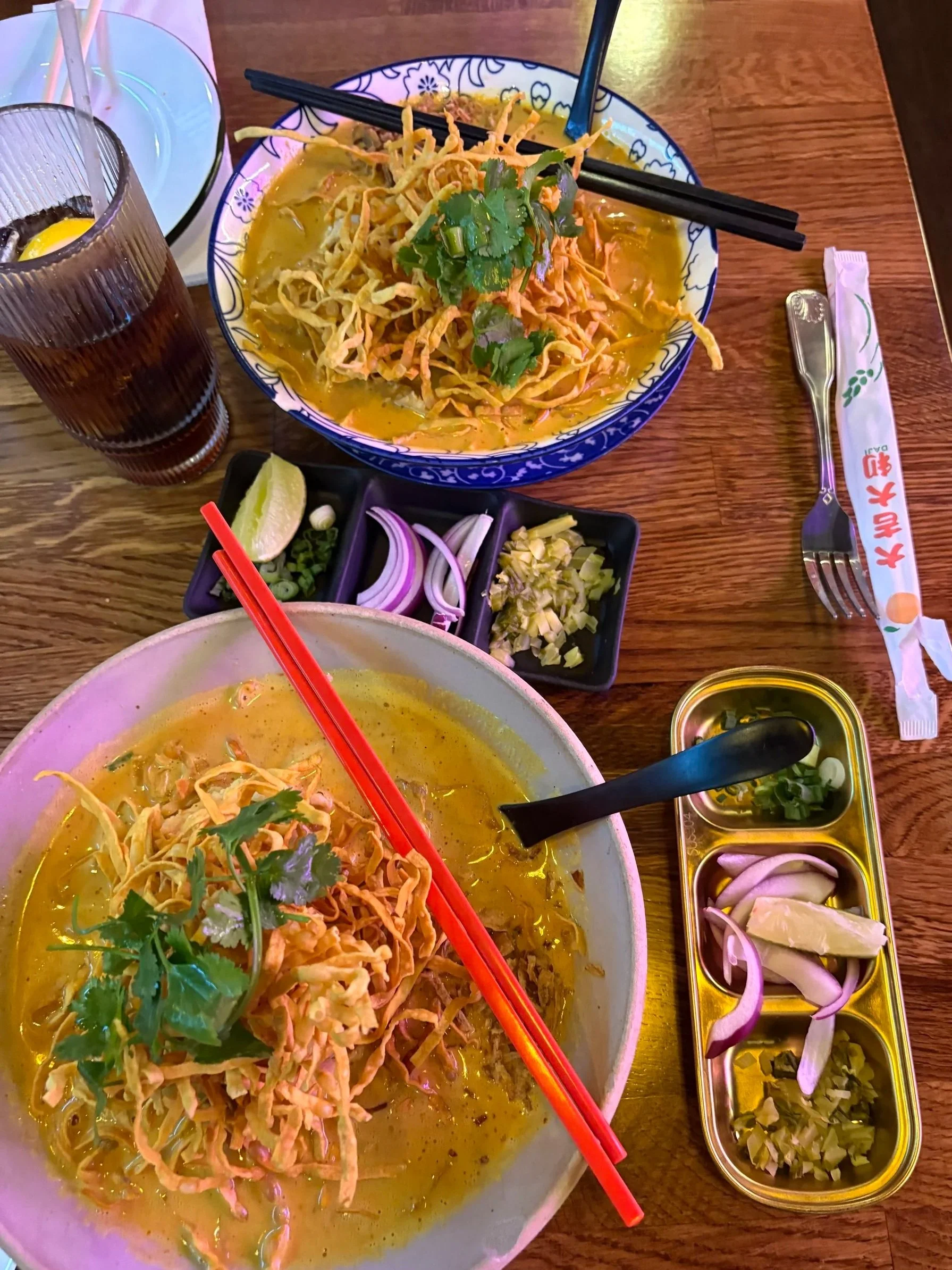
Chicken Khao Soi Noodle Soup ($18.95)
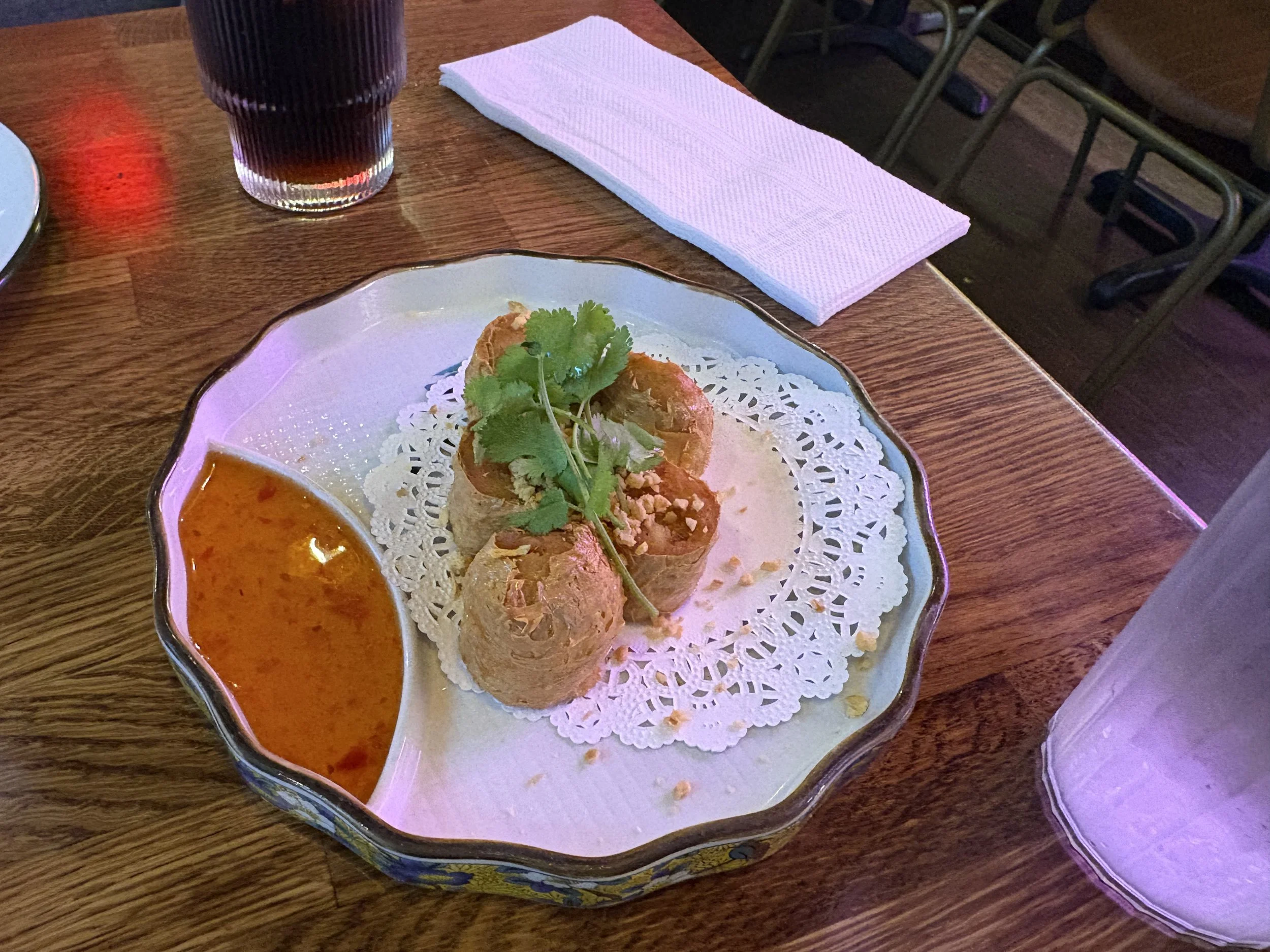
Jor Poo, Crispy crab dumpling ($16.95)